
Steel exterior doors cost less upfront than fiberglass or iron and last 30 to 50 years with basic care. They dent, and they rust if the finish gets damaged and stays that way. They work best in covered entries, on tight budgets, and where a fire rated door is required.
Most of what people believe about steel is only half right. Some sources call it the toughest door money can buy. Others claim it falls apart in ten years. Neither one holds up.
Here is what steel exterior doors actually do well, how long they really last, and where they fall short.
Steel doors earn their place for real reasons.
It costs less upfront. The price sits below fiberglass, iron, and most solid wood. On a tight budget, that matters.
It is easy to find. Steel comes in common sizes and styles. Lead times are short, which helps when a job needs to keep moving.
It resists impact. Steel is hard to kick through. That strength matters on a door that needs to feel solid without a big price tag.
It can be fire rated. Doors between a garage and a living space have to meet a fire requirement in most areas. Steel is a common way to meet it. Check with your local building department.
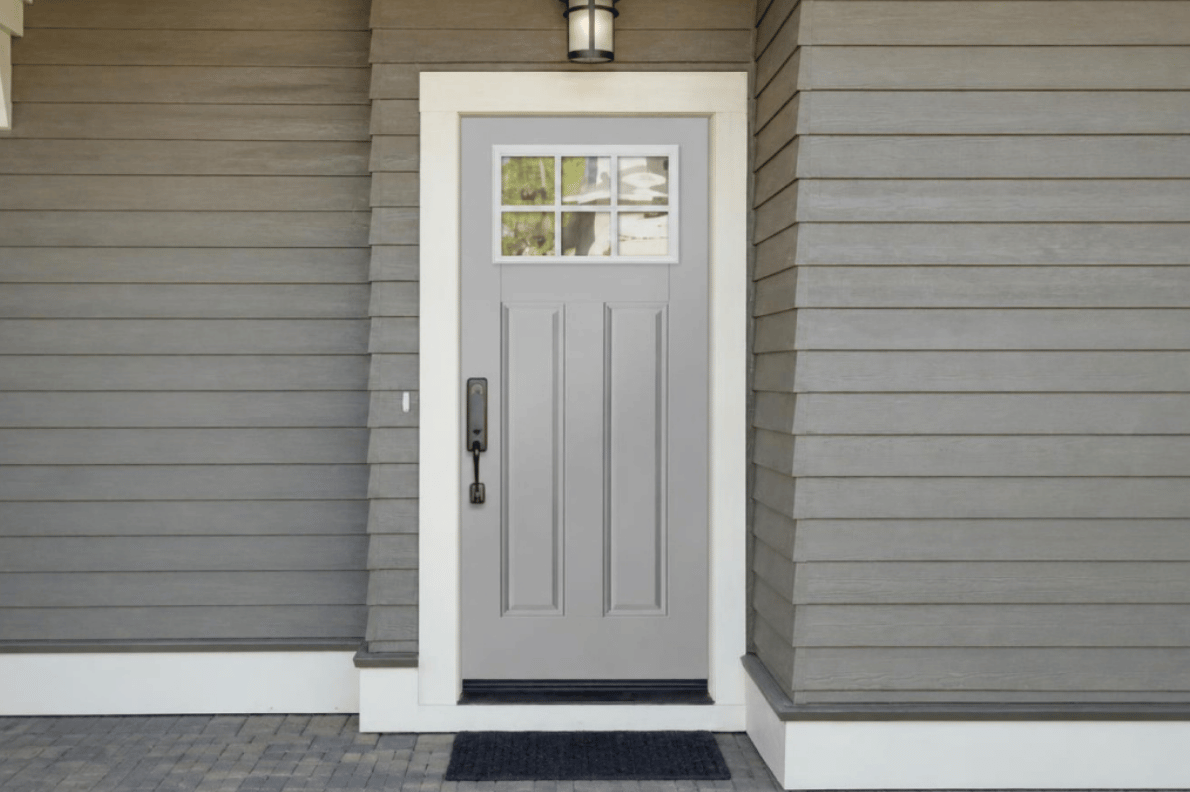
It paints well. A fresh coat changes the whole look of an entry for very little money.
Best for: homeowners and contractors who want a solid door at the lowest price.
Most steel exterior doors last 30 to 50 years when the finish is kept up. Home inspection groups put exterior steel doors near the top of the list for longevity, right alongside fiberglass and wood. A door under a deep porch can outlast the mortgage.
The short lifespans you see quoted come from harsh conditions. Salt air, constant driving rain, and no overhang can cut a steel door down to 10 or 15 years. North Georgia is humid, but it is not the coast. Exposure and upkeep matter far more than the material itself.
Warranties tell a similar story. Many steel door slabs carry 15 to 20 years of coverage, with about 5 years on the factory finish. Bottom tier utility doors sometimes carry only 1 year.
weatherstripping and gaskets usually need replacing every 5 to 8 years on any material. That is normal upkeep, not a failure.
Steel gets sold as the secure option. That is fair, but the door is only part of the picture.
The frame carries the load. A strong door in a weak frame is only as good as the wood around it. The jamb is usually the first thing to give.
The hardware does the real work. A quality deadbolt and a reinforced strike plate with long screws anchored into the framing matter more than the slab material.
Steel dents and stays dented. A deep dent can affect how the door seals and closes. Steel does not spring back the way it went in. Fiberglass resists dents better, though a hard enough hit can crack it.
Steel can be part of a secure entry. It is just not secure by default because it is metal.
Better than most people expect.
A steel door is not a slab of metal. It is a thin steel skin over a foam core. Insulated steel exterior doors generally test between R-5 and R-6. Solid wood usually lands between R-2 and R-4. Fiberglass runs about R-6 or better.
So steel typically insulates better than wood, not worse.
The weak point is the frame, not the door. Metal conducts heat, so heat and cold can travel through the frame and edges. That is why a thermally broken frame and good weatherstripping matter so much.
The bigger issue is almost always the install. A door hung out of square in an older home will leak no matter how good the slab is.
Less than people fear, but more than nothing.
Seal any bare metal. Cut edges, hinge mortises, and screw holes are where rust starts. Get them sealed before the door goes in.
Touch up scratches early. Most residential steel is galvanized and finished at the factory. Rust only takes hold where that coating is broken. Fix a scratch and it stays a scratch.
Repaint when the finish dulls. Plan on it every several years depending on sun exposure.
Check the weatherstripping. Replace it when it hardens or flattens out.
Best for: owners who do not mind a paint touch up now and then.
Steel tends to work well when:
Steel tends to be a poor fit when:
Our exterior doors page covers all the materials we carry. Here is a quick look at how they stack up.
| Material | Typical Lifespan | Rust Risk | Maintenance | Relative Cost |
|---|---|---|---|---|
| Steel | 30 to 50 years | Yes, where the finish is damaged | Moderate | Lower |
| Fiberglass | 30 to 50 years | None | Low | Moderate |
| Wood | 30 years and up with real upkeep | None | High | Moderate to higher |
| Iron | 30+ years | Yes, where the finish is damaged | Low | Higher |
Steel and wood share a similar lifespan, but wood needs even more upkeep. Fiberglass pulls ahead fast when you factor in how long it lasts and how little it needs. Iron exterior doors cost more upfront but rarely need replacing.
Steel’s lower price is real. It comes with a shorter life and more maintenance. That works for some projects. For others, spending a little more now saves money later.
Steel, fiberglass, iron, wood. The right answer depends on your opening, your exposure, and your budget.
Our team can walk you through it. Stop by the Dawsonville showroom at 501 Carlisle Road, or call us at (770) 894-1632.
Most last 30 to 50 years when the finish is maintained. Sheltered openings do better. Salt air and constant weather exposure can cut that to 10 or 15 years.
Only where the coating is broken. Most residential steel doors are galvanized and factory finished. Scratches, dents, and unsealed cut edges are the usual starting points.
Usually yes. Insulated steel generally tests between R-5 and R-6, while solid wood falls between R-2 and R-4. The install matters more than either number.
Not by much on their own. Security comes mostly from the frame, the deadbolt, and a reinforced strike plate anchored into the framing.