

If your windows are drafty, foggy between the panes, hard to open or close, or more than 20 years old, it is probably time to replace them. Replacement windows improve comfort, lower energy bills, and can prevent bigger problems like water damage.
Windows do not fail all at once. They fail slowly. A small draft here. A little fog between the glass there. Your energy bill creeps up, but you are not sure why.
Most homeowners do not think about their windows until something is clearly wrong. By that point, the problem has usually been building for a while. The good news is that the warning signs are easy to spot once you know what to look for.
This guide covers the most common signs that your windows are failing, why it happens, and how to decide whether repair or replacement windows is the right move.
There are a handful of signs that show up again and again. If you notice more than one, replacement windows are usually the better path.
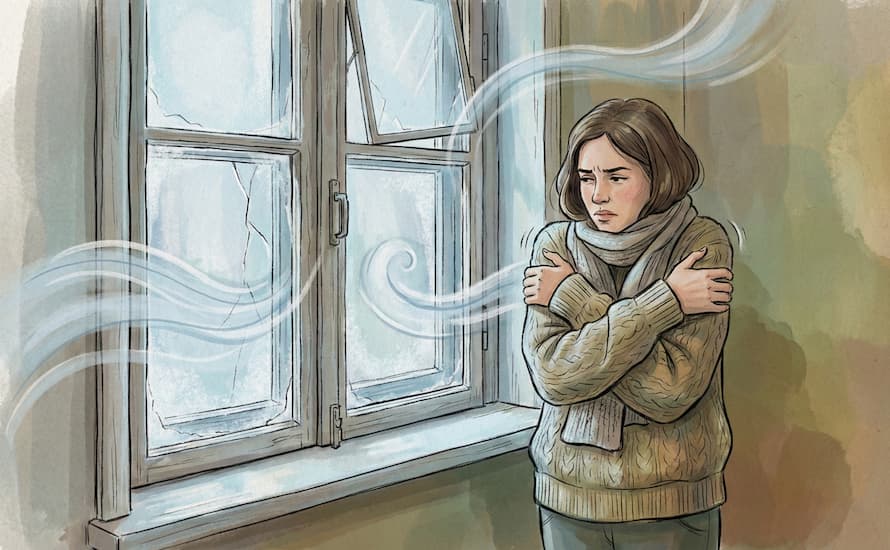
Drafts near the window are one of the first signs. If you can feel air moving around a closed window, the seal has likely worn down. Weather stripping and caulk can help temporarily, but if the frame is warped or the seal is gone, patching only delays the problem.
Fog or condensation between the panes means the seal between the glass layers has failed. Once moisture gets inside, it cannot be removed. The window will stay foggy and its insulating ability drops significantly.
Difficulty opening or closing is a sign of frame damage. Wood frames swell and warp over time, especially in humid climates. Vinyl and aluminum frames can also shift if the home settles or the installation was not done correctly.
Visible damage like cracking, peeling, or rotting frames is straightforward. If the frame is deteriorating, the window is not performing the way it should.
Rising energy bills without a clear reason can point to windows. If your heating and cooling system is working harder to keep up, your windows may be letting too much air in and out.
Climate is one of the biggest factors. North Georgia gets hot, humid summers and cold winter nights. That constant swing between heat and cold puts stress on window materials year after year.
Humidity is especially hard on older windows. Moisture works its way into wood frames and causes swelling, warping, and eventually rot. Seals break down faster in humid conditions too.
Sun exposure matters as well. Windows that face south or west get the most direct sun. UV rays break down frame materials, dry out seals, and cause fading on the glass coatings over time.
Age is the other big factor. Most residential windows last 15 to 25 years. If your windows are older than that, they were built with older technology. The glass, seals, and frames are simply not as effective as what is available today.
It is not always one thing that causes failure. Usually it is a combination of age, weather, and exposure working together over time.
More than most people realize.
Windows are one of the biggest sources of energy loss in a home. When seals fail or frames warp, outside air gets in and conditioned air gets out. Your heating and cooling system works harder to compensate. That shows up on your bill every month.
In summer, hot air leaking in means your air conditioner runs longer. In winter, cold air getting through means your furnace works overtime. Either way, you are paying more than you need to.
Replacement windows with properly sealed, energy-efficient ones can make a noticeable difference. Many homeowners see a real drop in their energy costs after switching to newer replacement windows with vinyl or better insulation.
The savings add up over time. A window that is costing you money every month is not really saving you anything by staying in place.
It depends on what is wrong and how old the window is.
Minor issues like worn weather stripping or loose caulk can be repaired. If the glass is fine, the frame is solid, and the seal is intact, a small repair may buy you a few more years.
But if you are seeing multiple problems on the same window, repair usually does not make sense. Fixing a draft but ignoring a broken seal just delays the expense. You end up spending money on repairs and still needing to replace the window later.
A good rule of thumb is this: if the window is more than 15 years old and showing two or more signs of failure, replacement windows are usually the smarter move.
Replacement windows also give you the chance to upgrade. Newer windows offer better insulation, easier operation, and improved durability compared to what was available even ten years ago.
The two most common options for replacement windows are vinyl and premium.
Vinyl windows are popular for good reason. They hold up well in humidity, resist warping and rot, and require very little maintenance. They do not need to be painted or stained. For most homes in North Georgia, vinyl is a strong, reliable choice that fits a wide range of budgets.
Premium windows offer higher-end materials and performance features. They may include aluminum-clad frames, better glass coatings, or improved hardware. These are a good fit for larger window openings, high-exposure walls, or homeowners who want the highest level of performance.
Both types come in common styles like double-hung, single-hung, casement, and sliding. The best type depends on the size of the opening, how you want the window to operate, and the look you are going for.
If you are not sure which type fits your situation, talking to someone who knows the products and the local conditions helps. The right window for a lake house in Dawsonville might be different from the right window for a home in Cumming or Alpharetta.
A few things matter more than the rest.
Energy ratings tell you how well the window insulates. Look for windows with low U-factor ratings. A lower number means better insulation. In our climate, this directly affects your comfort and your energy costs.
Frame material affects how long the window lasts and how much maintenance it needs. Vinyl is low maintenance and handles humidity well. Wood looks great but needs regular upkeep, similar to wood doors.
Glass quality matters too. Double-pane glass with an insulating gas fill is standard for most replacements now. Some windows offer Low-E coatings that reflect heat and reduce UV damage inside the home.
Proper installation is just as important as the product itself. A great window installed poorly will still draft, leak, and underperform. Make sure whoever installs your windows does it correctly the first time.
We carry vinyl replacement windows and premium windows at our Dawsonville location. You can see different styles and frame options in person and compare them side by side.
Our team can help you figure out what type of window makes sense for your home, your exposure, and your budget. Whether you need one window or a full house replacement, we can walk you through the options and help you plan.
We also work with homeowners and contractors on custom sizing and project coordination. If your openings are not standard or your project has specific needs, our team can help with that.
Give us a call or stop by. We are happy to help you figure out the right next step for your windows.