
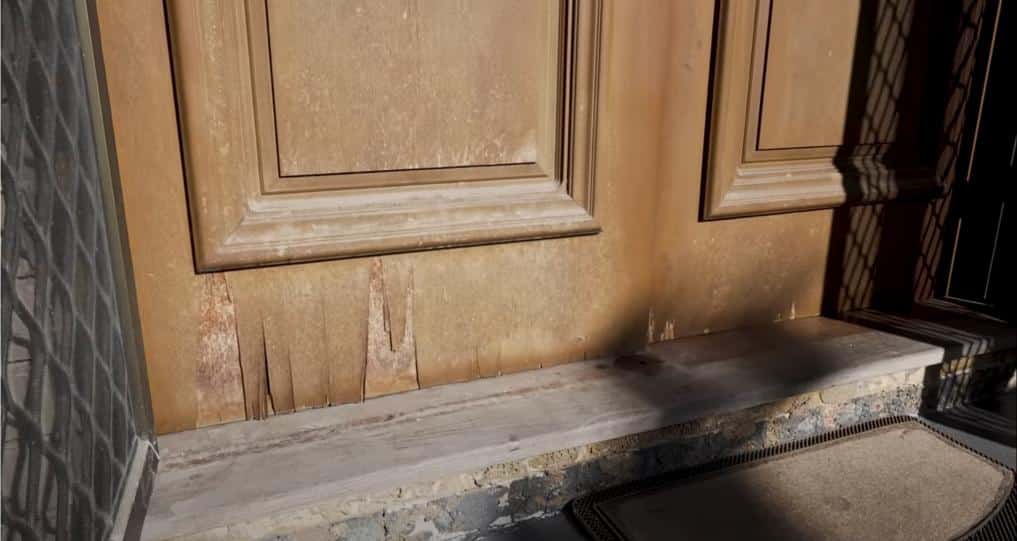
Your front door may need replacing if you notice drafts, difficulty opening or closing, visible damage, water stains, or rising energy bills. Door lifespan varies widely by material. Fiberglass and iron last the longest. Steel and wood wear out much faster. If yours is showing multiple warning signs, replacement usually makes more sense than ongoing repairs.
Your front door does more than let people in. It keeps weather out, holds in heated or cooled air, and protects your home. When it stops doing those jobs well, everything else suffers.
The problem is that doors wear out slowly. You might not notice the draft until winter hits. You might not realize how hard you have been pushing to get it closed. By the time the signs are obvious, the door has been costing you money and comfort for months.
Knowing what to look for helps you catch problems early. Some issues can be fixed. Others mean it is time for a new door.
Some signs are easy to spot. Others take a closer look. Here is what to watch for.
A drafty door is not just uncomfortable. It costs real money.
Your heating and cooling system works harder to keep up. That shows up on your energy bill every month. In North Georgia, where summers are hot and winters can get cold, a leaky door makes a noticeable difference.
Drafts also let in humidity. That can make your home feel stuffy or clammy even when the temperature is set right.
If you have tried replacing the weatherstripping and the drafts keep coming back, the problem is usually the door itself. Warping or frame damage can create gaps that no amount of new seals will fix.
Door lifespan depends on the material. The differences are bigger than most people expect.
| Material | Typical Lifespan | Typical Warranty |
| Iron | 30+ years | Often 10+ years |
| Fiberglass | 20–30 years | Often 10+ years |
| Aluminum Clad | 20–30 years | Often 10+ years |
| Aluminum | 15–20 years | 5–10 years |
| Vinyl | 15–20 years | 5–10 years |
| Steel | 5–10 years | 1–5 years |
| Wood | 5–10 years | 1–5 years |
Iron is best for homeowners who want maximum durability and security.
Fiberglass is best for those who want long life with low maintenance.
Aluminum clad is best for homeowners who want the look of wood with better weather protection.
Steel is best for tight budgets, but expect to replace it sooner.
Wood is best for traditional looks, but only if you are committed to regular upkeep.
The direction your door faces also matters. A south-facing door in full sun will age faster than a covered entry.
Not every problem means you need a new door. Some issues are easy to fix.
But if you are dealing with warping, rot, large cracks, or drafts that keep coming back, repair becomes a losing game. Replacement is usually the smarter investment.
If you decide it is time for a new door, here is what matters most.
Material. Each option has trade-offs.
Fiberglass is best for low maintenance and long life. It resists weather and can look like real wood. A popular choice for North Georgia homes.
Iron is best for security and durability. It costs more but can last 30 years or longer.
Aluminum clad is best for those who want wood on the inside and weather protection on the outside.
Aluminum is best for rust resistance on a moderate budget. It lasts 15 to 20 years.
Vinyl is best for budget-conscious buyers. It lasts 15 to 20 years but may not hold up in extreme sun.
Steel is best for affordability upfront. But expect 5 to 10 years before rust and wear become issues.
Wood is best for classic looks if you can commit to maintenance. In humid climates, expect 5 to 10 years.
Energy efficiency. Look for doors with good insulation ratings. A well-insulated door keeps conditioned air in and outside air out.
Fit. A door that fits the opening properly performs better and lasts longer. If your opening is non-standard, you may need a custom size.
Style. Your front door sets the tone for your home. Options range from simple and clean to decorative glass and sidelites.
Sometimes the door is fine but the frame is not.
Signs of frame problems include gaps that appear suddenly, doors that used to close easily but no longer do, and visible rot or damage around the edges.
Frames can shift as a house settles. They can also rot if water gets behind the trim. In older North Georgia homes, this is common.
If the frame is damaged, replacing just the door may not solve the problem. The new door will not fit right and the same issues will come back.
A new exterior door comes with real benefits.
If your door is showing warning signs, start by taking a closer look. Check for drafts, examine the edges and bottom, and see how it opens and closes.
If the problems are minor, a repair might be enough. If you are seeing multiple issues, or if your steel or wood door is over 5 years old and showing wear, it is probably time to look at replacements.
Think about what matters most to you. If you want something that lasts with little upkeep, fiberglass or iron are your best options. If budget is tight, steel or vinyl can work for the short term.
You do not have to figure it out alone. Our team at The Liquidators Company can help you evaluate your options. We carry a wide selection of exterior doors including fiberglass doors and iron doors that stand up well to North Georgia weather.Stop by our Dawsonville showroom or give us a call. We will help you find the right fit for your home and your budget.